Health and Safety Policy for Cleaners in Brentford
 Our health and safety policy sets out the standards expected from every cleaning professional working in homes, offices, and commercial spaces. This policy is designed to protect staff, clients, and visitors by promoting safe behaviour, careful planning, and consistent working practices. Whether carrying out routine upkeep or more detailed cleaning tasks, every Brentford cleaner must work in a way that reduces risk and supports a safe environment.
We recognise that cleaning work can involve wet floors, chemical exposure, lifting, repetitive movement, and the use of equipment that requires attention and care. For that reason, our cleaning health and safety approach focuses on prevention, awareness, and responsibility. All work should be completed with proper preparation, suitable protective measures, and respect for the area being cleaned.
 A safe cleaning service begins with proper assessment. Before any task starts, cleaners should identify possible hazards, including fragile items, electrical equipment, sharps, spills, uneven surfaces, and restricted access areas. If a hazard cannot be controlled immediately, the task should be paused until it is made safe. This approach applies to all cleaners Brentford projects, from light domestic duties to larger maintenance schedules.
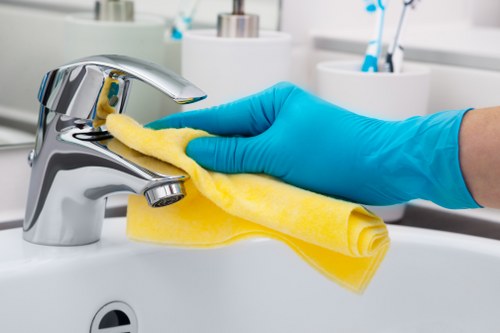
Personal protective equipment, where needed, must be used correctly and checked before each job. This may include gloves, masks, eye protection, and non-slip footwear. Protection should always match the task and the materials being handled. Cleaners should also wash their hands regularly, avoid touching their face during work, and keep cuts or skin irritation covered to reduce the spread of contamination.
Safe handling of chemicals is essential. Cleaning products must be stored in their original containers, clearly labelled, and used according to the instructions provided. Unauthorised mixing of substances is strictly forbidden, especially where fumes or toxic reactions may occur. A responsible Brentford cleaning service always uses products carefully, ventilates spaces properly, and keeps chemicals away from food, children, and pets when applicable.
 Equipment safety is equally important. Machines, vacuums, mops, extension leads, and other tools should be inspected before use to ensure they are in good condition. Any damaged item must be reported and taken out of service until repaired or replaced. Cables should be positioned to avoid trip hazards, and electrical items must never be handled with wet hands or used near standing water unless they are designed for that purpose.
Manual handling is another key part of safe working practice. Cleaners should lift, carry, push, and pull items with care, keeping loads manageable and using correct posture. When an item is too heavy or awkward, assistance should be requested rather than forcing the movement. This reduces the risk of injury and supports long-term wellbeing across all cleaning services.
Slips, trips, and falls remain among the most common hazards in cleaning environments. Wet floors should be signposted where necessary, and cleaned areas should be left tidy and free from clutter. Mats, cords, buckets, and tools must be positioned carefully so that movement through the space remains safe. Good housekeeping is not optional; it is a basic part of every safe cleaning routine.
Fire safety must also be respected at all times. Cleaners should know where exits, alarms, and fire-fighting equipment are located, and should never block escape routes with supplies or equipment. Flammable products should be handled and stored with care. If a fire alarm sounds or any emergency occurs, work must stop immediately and the area must be evacuated according to the site procedure.
We expect every cleaner to remain alert to signs of illness, fatigue, or stress that may affect safe performance. If someone feels unwell or unable to carry out a task safely, they should report it and stop work if needed. Fatigue can reduce concentration and increase the chance of mistakes, so sensible scheduling, adequate breaks, and honest communication are important parts of our policy.
 Accident and incident reporting is a central responsibility. Any injury, spill, near miss, damaged equipment, or unsafe condition should be reported as soon as possible. Prompt reporting helps prevent repeat problems and supports continuous improvement. Records should be completed accurately and kept in line with internal procedures so that concerns can be reviewed and addressed.
Training and supervision are essential to maintaining high standards. Every Brentford cleaner should receive the instruction needed to carry out tasks safely and confidently. This includes safe use of chemicals, correct operation of equipment, emergency awareness, and understanding of workplace hazards. Refresher training should be provided when required, especially when new methods or products are introduced.
We also promote respect for the client’s property and for one another. Cleaners should work carefully around furniture, fixtures, and personal belongings, and should avoid any behaviour that could create damage or unnecessary risk. Confidentiality, professionalism, and attention to detail all contribute to a safer and more reliable service.
 This policy is reviewed regularly to ensure it remains effective, practical, and aligned with safe working expectations. Our goal is to provide a clean environment without compromising wellbeing at any stage of the process. By following these principles, every member of the team supports a dependable and safe cleaning service built on responsibility, care, and awareness.